November 4, 2026
Few materials can match the natural beauty of marble. Its soft veining, cool surface, and luminous finish have made it a favorite in homes for centuries, and it continues to appear in kitchens, bathrooms, and entryways today. However, marble behaves differently than porcelain or ceramic, so it pays to understand what you're buying before you commit. Whether you're renovating a primary bathroom or planning a dramatic foyer, knowing the basics will help you choose marble tile that looks stunning and holds up to daily life. Below, we cover the key factors to consider so you can make a confident decision for your home.
Understanding the Different Types of Marble
Marble comes from quarries around the world, and each variety has its own color, veining, and character. Carrara marble, one of the most popular choices, features a white or soft gray background with delicate gray veining. Calacatta tends to have a brighter white base with bolder, more dramatic veins, while Statuario pairs a bright white background with striking gray veining. Beyond white varieties, you'll find black marble with gold or white veining, warm beige options like Crema Marfil, and green or gray stones that add depth to a space.
Origin also plays a role in your decision. Many sought-after varieties come from quarries in Italy, Spain, Greece, and Turkey, and premium European imports often deliver exceptional quality and consistency. When you compare samples, pay close attention to background color, vein thickness, and overall tone so your selection complements your cabinetry, fixtures, and paint colors.
Because marble is a natural stone, no two pieces look exactly alike. Some homeowners love this variation, while others prefer a more uniform appearance. Ask to see several samples from the same lot so you get a realistic sense of how the veining will look across an entire floor or wall. This step helps you avoid surprises once the installation is complete.
Comparing Polished and Honed Finishes
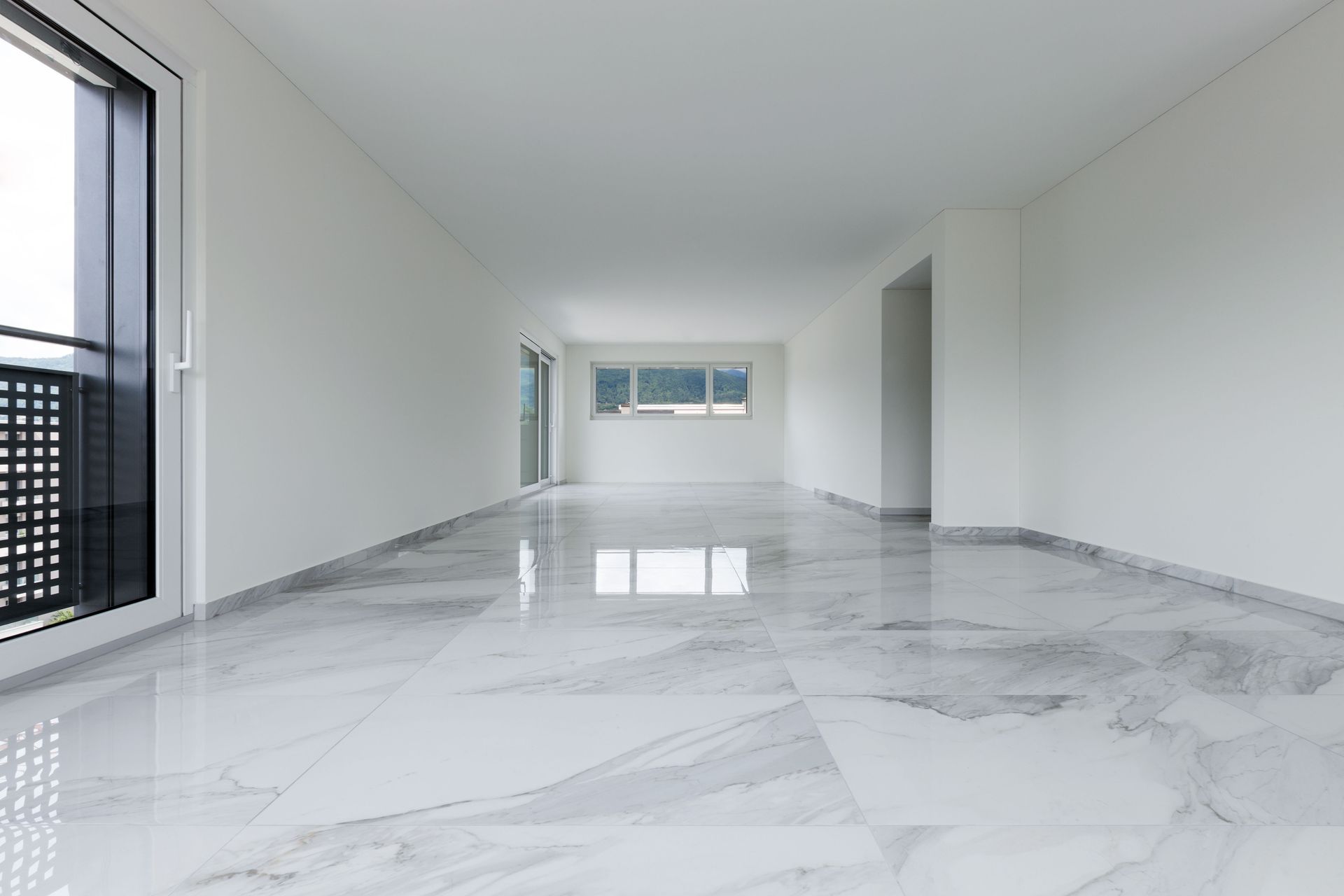
The finish you choose affects both the look and the performance of your marble tile. A polished finish creates a glossy, reflective surface that highlights the stone's color and veining. It works beautifully on walls, backsplashes, and low-traffic floors, but it can feel slippery when wet and may show scratches and etching more easily.
A honed finish, on the other hand, has a matte or satin appearance. It offers better traction, which makes it a practical choice for bathroom floors and high-traffic areas. Honed surfaces also tend to disguise minor scratches and wear. Some homeowners also consider tumbled or brushed finishes for a softer, more rustic look. Think about how you'll use the space and how much shine you want before settling on a finish.
Choosing the Right Size and Thickness
Size plays a major role in the overall look of your project. According to The Spruce, 12 x 12 inches is the most common marble tile size, and these pieces typically measure 3/8 inch thick. This standard size works well for many floors and walls, and it often makes installation more straightforward.
That said, you have plenty of other options. Larger formats create a seamless, modern look with fewer grout lines, which can make a small room feel more open. Smaller pieces, such as mosaics and subway shapes, add texture and visual interest to backsplashes, shower floors, and accent walls. Keep in mind that thickness matters, too. Thicker tile usually holds up better on floors, while thinner options may suit walls and backsplashes. A tile professional can help you match the right size and thickness to your space.
Considering Where You'll Install It
Marble can go nearly anywhere in your home, but some spaces demand more from it than others. Bathrooms are a classic choice, since marble adds a spa-like feel to floors, shower walls, and vanity backsplashes. In these areas, honed finishes and smaller tiles on shower floors can improve slip resistance.
Kitchens present a few more challenges. Marble is a calcium-based stone, so acidic substances like lemon juice, wine, tomato sauce, and vinegar can etch the surface. If you love the look of marble tile in your kitchen, consider using it on a backsplash rather than in a heavy prep area. Entryways and living spaces can also showcase marble beautifully, though high-traffic zones may benefit from a honed finish that hides wear. For areas with heavy use or moisture concerns, marble-look porcelain may offer a lower-maintenance alternative with a similar appearance.
Planning for Care and Maintenance
Marble rewards the homeowners who care for it. Because it's a porous stone, it can absorb liquids and stain if you leave spills sitting on the surface. Sealing helps protect against moisture and stains, and in our experience, most marble surfaces benefit from resealing every one to two years, depending on use. Ask your installer how often to reseal your specific stone.
Day-to-day cleaning is simple when you use the right products. Wipe up spills quickly, sweep or dust mop floors regularly to remove grit, and clean with a pH-neutral stone cleaner. Avoid vinegar, bleach, and abrasive scrubbers, which can dull or damage the finish. With consistent care, marble tile can maintain its beauty for decades and develop a gentle patina over time.
Setting a Realistic Budget
Marble often costs more than ceramic or porcelain, but prices vary widely depending on the variety, origin, finish, and size. Rare stones with dramatic veining typically sit at the higher end, while more widely available options like Carrara tend to be more affordable. Beyond the tile itself, factor in installation, setting materials, sealer, and ongoing maintenance.
It's also smart to order extra material to account for cuts, breakage, and future repairs. In our experience, ordering about 10% to 15% more than your measured square footage gives you a comfortable cushion. Because marble varies from lot to lot, having extra pieces from the same batch makes it much easier to replace a damaged tile years down the road. Shopping with a supplier that offers factory-direct pricing can also help you stretch your budget further on marble tile.
Working With Experienced Tile Professionals
While it might be tempting to tackle marble on your own, this stone requires careful handling and precise installation. Marble can crack if the subfloor lacks proper preparation, and certain varieties, especially white marble, need specific setting materials to prevent discoloration. Professional installers understand these details and have the tools to make clean cuts that showcase the stone's natural veining.
Working with knowledgeable tile professionals during the selection process matters just as much. A dedicated team can walk you through samples, explain the differences between finishes, and help you find marble tile that fits your style, space, and budget. They can also point you toward complementary products, such as mosaic accents or coordinating natural stone tile, that complete the look.
Choosing marble tile involves more than picking a color you love. When you understand the different varieties, finishes, sizes, and care requirements, you can select a stone that suits your lifestyle and adds lasting value to your home. If you're ready to explore your options, we invite you to visit us at Heartland Tile. Our family-owned selection studio offers factory-direct pricing on premium marble tile, including classic white Carrara, dramatic black and gold veining, and both polished and honed finishes. Contact us today to schedule a private appointment and receive your free quote!